Your Heart Attack Didn’t Start Today. It Started Decades Ago

A heart attack can seem to come out of nowhere. One minute you feel fine; the next, you’re in the emergency room. But here’s the important part: the heart attack may happen suddenly, but the disease that causes it usually begins many years earlier.
A new study published this week in the New England Journal of Medicine provides a striking reminder of just how early heart disease can begin. In the REACT study, researchers studied more than 16,000 adults who had no known cardiovascular disease. Using sophisticated imaging, they found that more than half, a whopping 57%, already had signs of atherosclerosis, the buildup of fatty deposits, or plaque, in their arteries. Even more importantly, this “silent” disease was present in some younger adults and became more common and extensive with age.
This discovery is important, but it isn’t entirely new. We have known for more than 70 years that heart disease can begin long before a person ever feels a symptom. After the Korean War, researchers examined the hearts and arteries of young American soldiers who had died in combat. Their average age was only 22. Many already had early signs of cholesterol buildup in their coronary arteries, the arteries that supply blood to the heart. The landmark study by Enos, Holmes, and Beyer was published in JAMA in 1953. These young men had never had a heart attack. Yet the disease that could eventually lead to one had already begun.
Cholesterol: It’s the Exposure That Counts
So what have we learned in the seven decades since those autopsies?
One of the most important lessons is that LDL cholesterol, the so-called “bad” cholesterol, is not just a number on your blood test. It is an exposure that adds up over time.
Think of LDL exposure like the miles on your car. The higher your LDL level and the longer you live with it, the greater the opportunity for cholesterol to accumulate in the artery wall and contribute to plaque.
Interestingly, newborn babies naturally have very low LDL cholesterol levels, generally around 30 mg/dL. LDL levels rise during the first couple of years of life, reaching roughly 60 mg/dL. These naturally occurring levels have given scientists an important clue about what our bodies may consider a physiologically low LDL level.
We now have decades of evidence, from genetics, population studies, and clinical trials, showing that the higher your LDL cholesterol and the longer you are exposed to it, the greater your risk of developing atherosclerosis and cardiovascular disease.
My late mentor, Peter O. Kwiterovich Jr., MD, was one of the pioneers in understanding just how early cholesterol disorders can appear. In a landmark 1973 study published in The Lancet, Dr. Kwiterovich and his colleagues demonstrated that familial hypercholesterolemia (FH), an inherited condition that causes very high cholesterol, could be identified even in newborns. In other words, for some people, the process that eventually leads to heart disease can begin almost from the very start of life.
So When Should We Start Paying Attention?
This brings us to an important question: If heart disease can begin decades before a heart attack, when should we start preventing it?
The answer is: earlier than we traditionally have.
The 2026 ACC/AHA Dyslipidemia Guideline recommends cholesterol screening beginning at age 19 and places much greater emphasis on the importance of reducing lifelong exposure to LDL cholesterol. For adults in their 30s, 40s, and 50s, we shouldn’t simply ask, “What’s my risk of having a heart attack in the next 10 years?” We should also consider the bigger picture: How much cholesterol exposure have I accumulated, and how much more will I have over the next several decades?
The good news is that we can do something about it.
For many people, the first step is lifestyle. Eating more foods rich in soluble fiber, such as oats, barley, beans, lentils, apples, pears, and psyllium, can help lower LDL cholesterol. Reducing foods high in saturated fat can help as well. And when lifestyle changes aren’t enough, or when a person’s inherited risk is particularly high, cholesterol-lowering medications can provide additional protection.
The goal isn’t simply to “treat a cholesterol number.” The goal is to reduce the amount of time your arteries are exposed to excessive LDL cholesterol. The earlier we identify and address that exposure, the more opportunity we have to prevent plaque from accumulating and potentially prevent the heart attack that might otherwise occur decades later.
The heart attack may be sudden. The disease usually isn’t.
For more practical strategies to protect your heart and lower your cardiovascular risk, see Heal Your Heart.
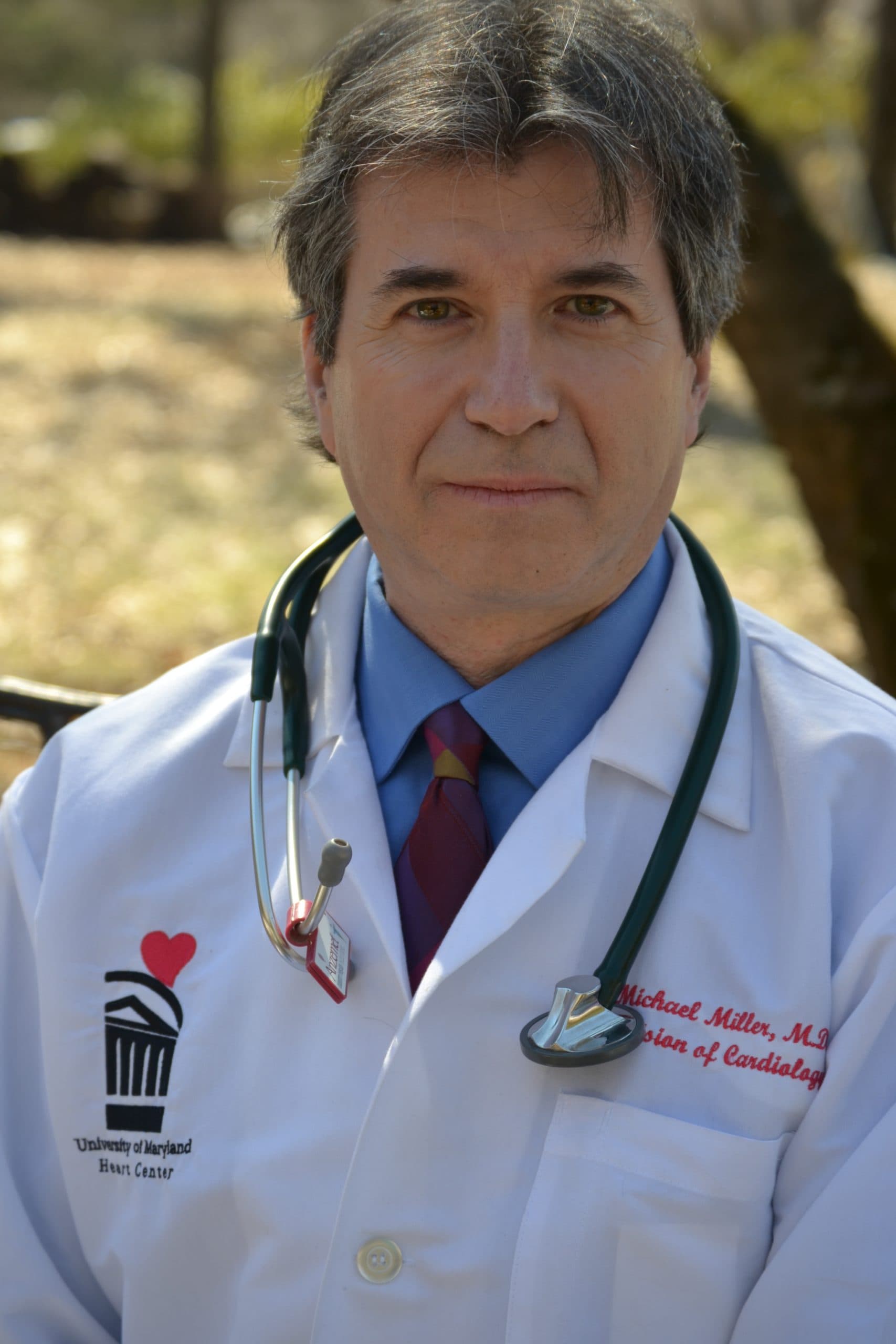
Michael Miller, MD, MASPC, FACC, FAHA, FNLA is a Cardiologist and Professor of Medicine, Hospital of the University of Pennsylvania and Chief of Medicine, Corporal Michael J Crescenz VAMC (Philadelphia). Currently, he is President of the American Board of Clinical Lipidology and Deputy Editor of the Journal of Clinical Lipidology, the flagship, peer-reviewed publication of the National Lipid Association (NLA)
Learn more at www.drmichaelmiller.net
Michael Miller, MD
MASPC, FACC, FAHA, FNLA
Dr. Miller is a leading cardiologist and heart health expert whose pioneering research on positive emotions, diet, and physical activity supports the integration of all three modalities for optimal vascular health.