From LDL to Lobotomies: Medical School Lessons That Molded a Mission

During my first year at Rutgers Medical School, I recall the excitement of my medical school professors, Darwin Prockop and Bjorn Olsen, as they recounted the recent discovery of how the body processes cholesterol. In fact, one of our Professors, Dr. Avedis Khachadurian, paved the way for the discovery of LDL receptors by observing in his Lebanese families that genetically inherited high cholesterol, or familial hypercholesterolemia (FH), followed two distinct genetic patterns: the common autosomal dominant form and a rare autosomal recessive form. I got to know Dr. Khachadurian quite well in medical school as we dined on bacon cheeseburgers (a campus favorite, before it was tabooed) and discussed our respective roles on the medical school admissions committee. Dr. Khachadurian was the Chair of the Committee, and I was a student representative.
The discovery of LDL receptors by Drs. Michael Brown and Joseph Goldstein revealed how the body removes cholesterol from the bloodstream. They found that people with the genetic condition FH lacked these receptors, thereby leading to dangerously high cholesterol and early heart disease. This groundbreaking work proved that LDL cholesterol caused atherosclerosis, and it laid the foundation for life-saving treatments like statins. For uncovering the key role of LDL receptors in cholesterol metabolism, they were awarded the Nobel Prize in Physiology or Medicine in 1985. Years later, during fellowship training at Johns Hopkins and under the tutelage of Peter Kwiterovich Jr, I took care of patients with FH, including a young boy whose cholesterol approached 800 mg/dL and who required coronary bypass surgery when he was only 12 years old. I also had the unique honor of examining/presenting another young patient with FH alongside Dr. Goldstein at an annual genetics conference, led by the pioneer medical geneticist, Victor McCusick.
Equally formative were my experiences in neuropsychiatry with Dr. Arthur Kling, a renowned Rutgers psychiatrist whose elegant studies in non-human primates were instrumental in understanding the role that the amygdala plays in processing of emotions. Under his mentorship along with Drs. Peter Carlton and Robert Deutsch, I explored the social consequences of frontal lobotomies (where brain regions that interact with the amygdala are severed), in patients who had undergone this procedure in the 1960s and early ‘70s, deepening my appreciation for the neurobiological basis of behavior. My clinical years also offered unforgettable experiences, including a rotation at Princeton Hospital, where I crossed paths with Vladimir Zworykin, the “father of television”. He spoke humbly of his pioneering invention, the iconoscope, which was the first practical video camera tube and for which he received the National Medal of Science.
Medical school provided me with invaluable insights that extended well beyond the classroom; it taught me that behind every patient is a remarkable story and behind every remarkable story is a mentor offering insights into seminal discoveries and societal contributions. These foundational years not only prepared me for a career in medicine but ignited lifelong interests in behavioral cardiology. A better understanding of the role that emotions play in cardiovascular health beyond traditional risk factors, such as high cholesterol, helped to mold a mission aimed at combining conventional and holistic approaches for preventing and treating heart disease.
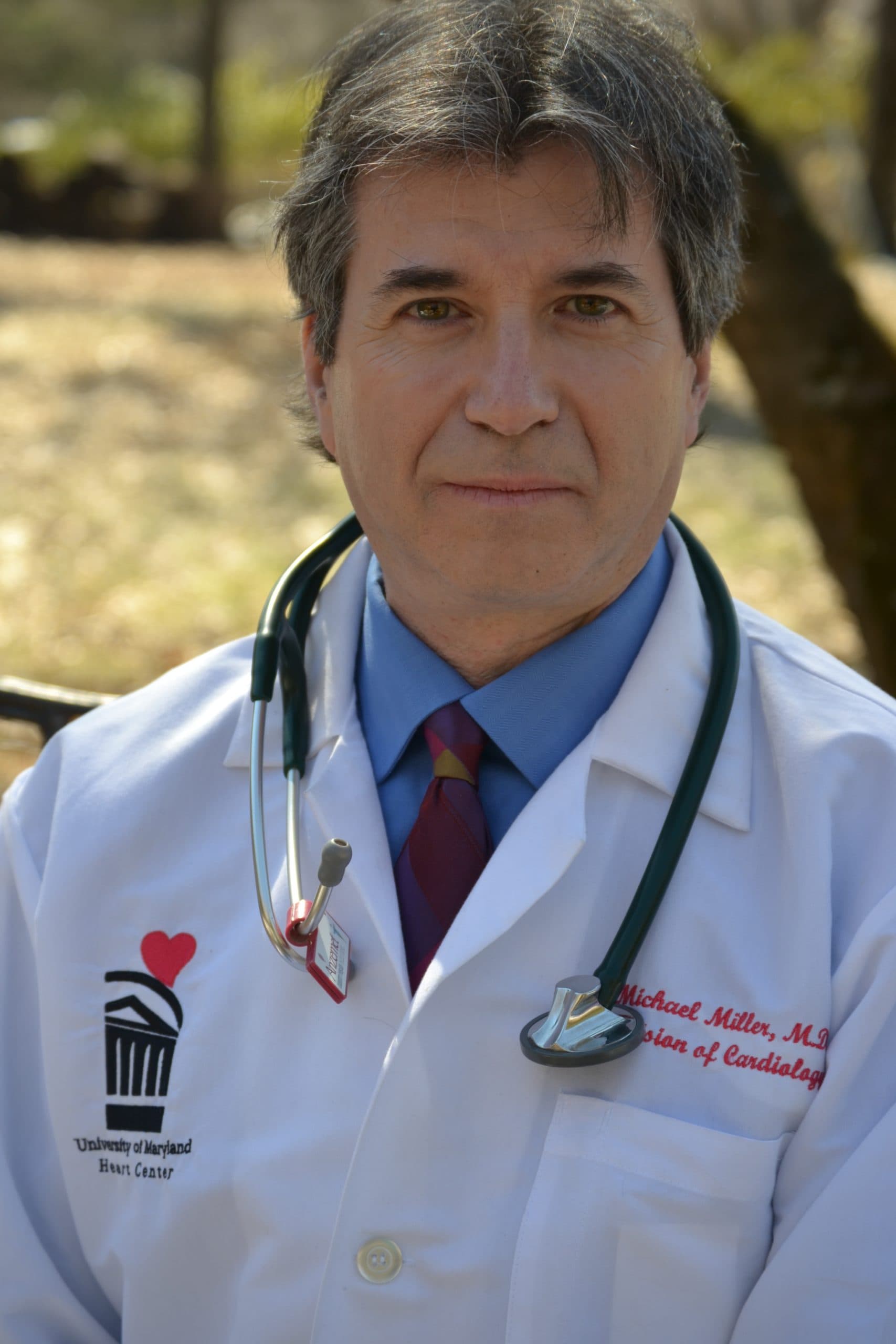
Michael MIller, MD is Chief of Medicine, Corporal Michael J Crescenz VAMC and Professor of Medicine, Hospital of the University of Pennsylvania. His latest book “Heal Your Heart” is published by Penguin Random House.
Michael Miller, MD
MASPC, FACC, FAHA, FNLA
Dr. Miller is a leading cardiologist and heart health expert whose pioneering research on positive emotions, diet, and physical activity supports the integration of all three modalities for optimal vascular health.